OpenSciLogger – the Science Logger App
A Flexible Logging Platform for Open Science
OpenSciLogger is an app and cloud‑hosted data logging platform designed to receive, organise, and manage data from open science environmental monitoring hardware.
It enables researchers, educators, and communities to collect high‑quality environmental data using transparent methods and adaptable tools.
What is OpenSciLogger?
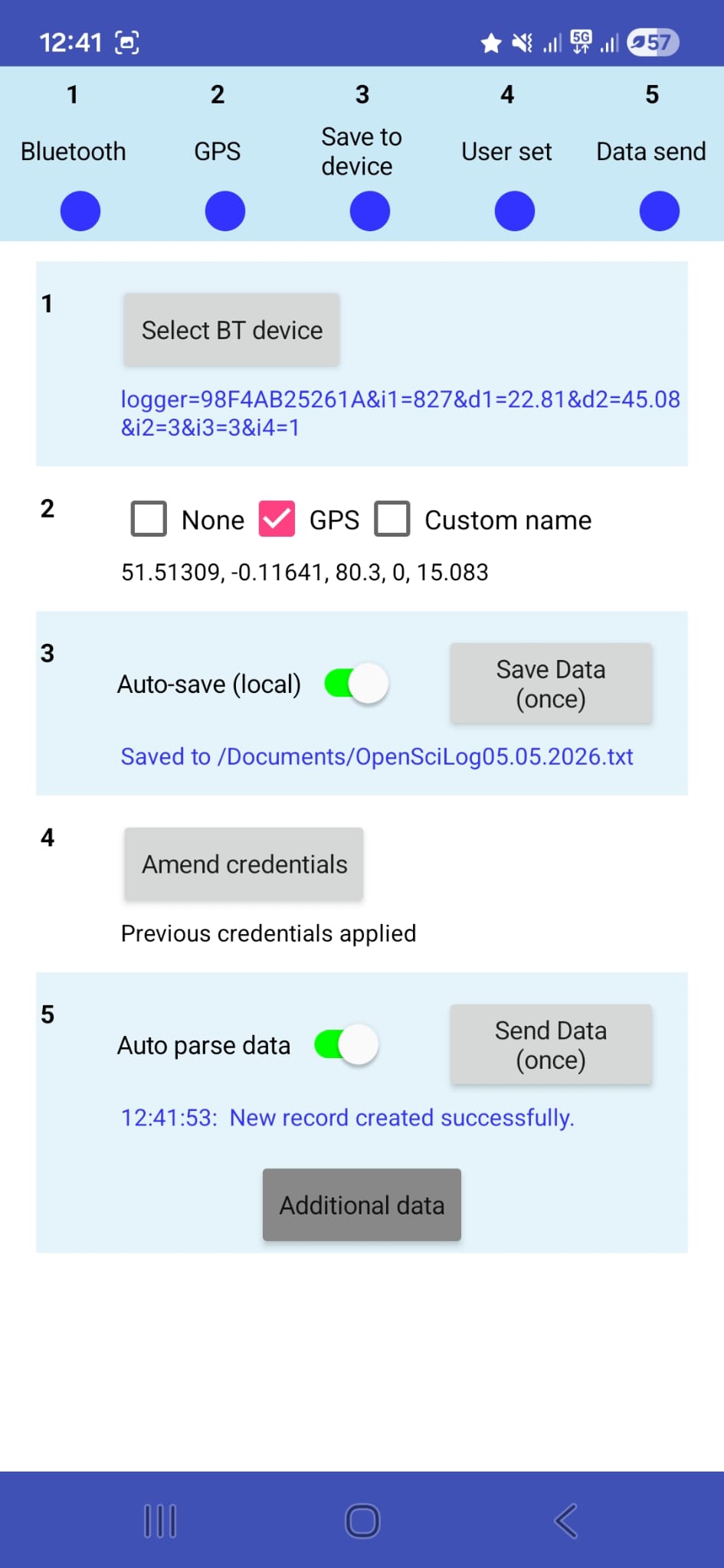
OpenSciLogger is a phone‑ or tablet‑based application that works in conjunction with Open Science Methods environmental science logging hardware. In addition to receiving parsed data streams from connected instruments, the app augments these measurements using the device’s own capabilities—including GPS location, motion data (accelerometer), and flexible options for local and cloud‑based storage. Together, this transforms sensor outputs into low-cost, structured and contextualised datasets suitable for a wide range of monitoring projects, from small‑scale educational experiments to long‑term community and research deployments.
The software is built to work with open‑design hardware, open data practices, and transparent scientific workflows. This combination allows users to understand how data is generated, even as the platform itself provides robust, managed logging and storage.
Open Hardware, Shared Methods
All supported monitoring instruments are based on open hardware designs, documented and shared on OpenScienceMethods.org. These designs can be built, adapted, repaired, and improved by others, ensuring accessibility and long‑term sustainability.
Current/future logging designs include:
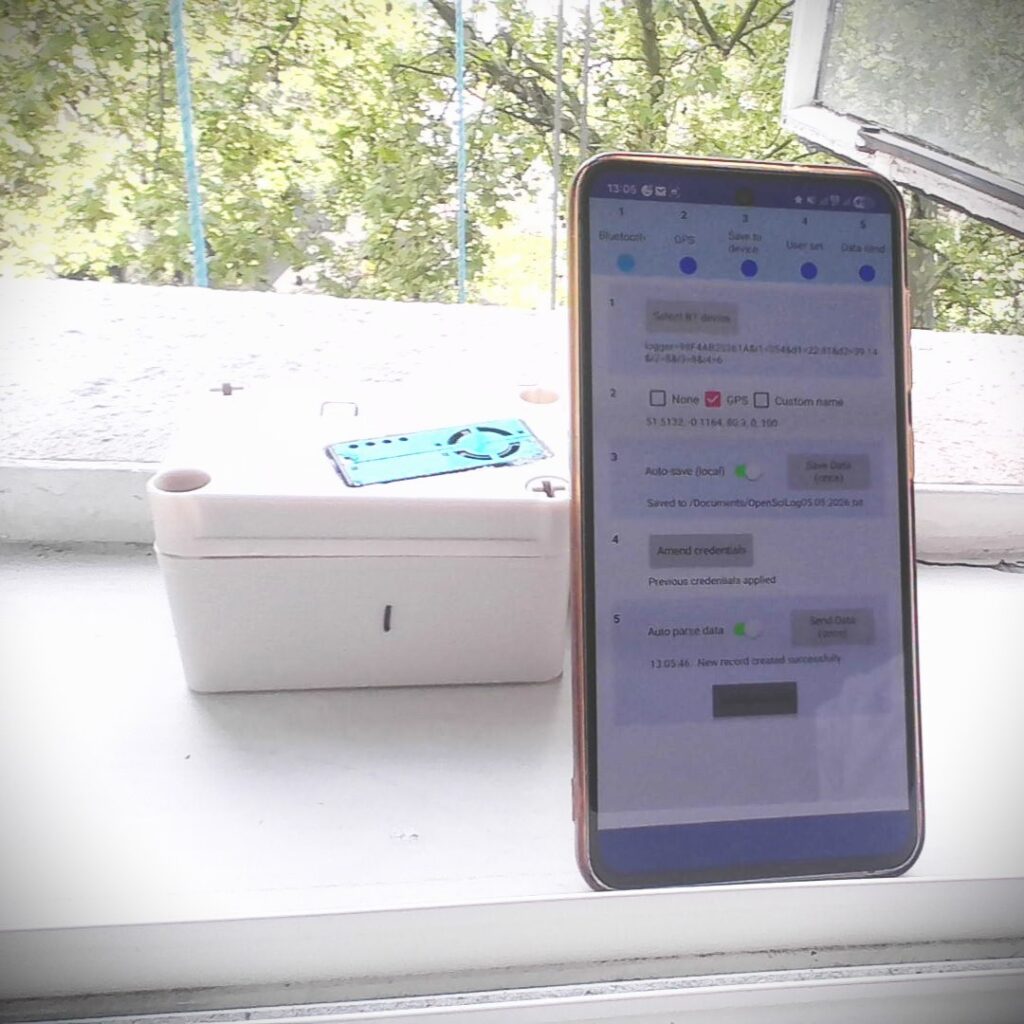
- Air quality monitoring (pictured left)
- Particulate matter: PM0.1, PM0.5, PM1.0
- CO₂ concentration (ppm), with temperature and humidity
- Temperature & humidity monitoring (expected June 2026)
- Water monitoring (expected August 2026)
- Total Dissolved Solids (TDS)
- Water temperature
These are living designs: some are already in active use, while others continue to evolve through collaboration between researchers and community contributors. Detailed documentation for each design is available on dedicated subpages.
Flexibility
OpenSciLogger is designed for adaptability.
- Current baseline configuration supports logging of up to 12 variables per deployment
- The platform is easily extendable beyond this baseline as project needs grow
- New variables and sensor combinations can be integrated through rapid developer intervention, meaning decisions of what sensors and data to use can quickly be adapted to communicate to our cloud infrastructure without our intervention.
This makes OpenSciLogger suitable for both well‑defined studies and exploratory or emerging research questions – for example through adding new environmental indicators as community priorities change.
What the Platform Can Do
Cloud‑hosted data ingestion
OpenSciLogger runs on a server‑based (cloud) infrastructure, receiving data from deployed monitoring hardware.
Flexible data storage
Projects can:
- Store data locally
- Sync data to external databases
- Combine both approaches, depending on governance and access needs
Structured, transparent logging
Data is logged with timestamps, variable definitions, and relevant context to support reuse, comparison, and long‑term value.
Export and access options
Data can currently be exported in:
- CSV format
- Web‑based table views
Additional formats and interfaces can be added as user needs evolve.
Future‑ready visualisation
The platform is designed with the potential for:
- Real‑time dashboards
- Live data views for classrooms or public engagement
- Project‑specific visual tools
Why OpenSciLogger?
Environmental data plays a critical role in education, research, and community action. OpenSciLogger exists to support:
- Environmental justice — enabling communities to generate and understand their own data
- Transparency — clear methods and visible assumptions
- Education — motivating students through hands‑on, real‑world science
- Reproducibility — shared designs and consistent logging practices
- Democratisation of science — lowering barriers to participation
By combining open hardware with a flexible, managed logging platform, OpenSciLogger bridges the gap between do‑it‑yourself instrumentation and robust scientific data practice.
A Platform Within a Larger Ecosystem
OpenSciLogger is one project within OpenScienceMethods.org, but a central one. It reflects the broader aim of the initiative: to share scientific methods, tools, and practices openly, and to foster collaboration between researchers, educators, students, and communities.
OpenScienceMethods.org acts as:
- A methods repository
- A collaborative community
- A partnership space, rather than a closed institution
Projects hosted range from early‑stage ideas to active data‑collection efforts, all welcoming wider participation.
Get Involved
You can participate in several ways:
- Build monitoring hardware using the published open designs
- Request access to OpenSciLogger for your project
- Join an existing research or community project, at any stage—from concept to deployment
- Partner or collaborate as a researcher, educator, or organisation
Current and proposed projects are listed on our Research Projects page, where you can see which initiatives are collecting data now and which are actively seeking collaborators.
Open methods enable shared knowledge.
OpenSciLogger helps turn environmental measurements into accessible, meaningful science—together.